The Blackwater River watershed sits in the Southern end of Virginia’s Coastal Plain, and depends on the Potomac Aquifer formation to supply freshwater (USGS, 2022). The Hampton Roads metro region just to the east of the watershed is one of Virginia’s more densely populated and developed areas. As human consumption of freshwater continues to increase, there has been a significant drawdown of aquifer resources. A regional center of this effect is sited at the City of Franklin, along the Blackwater River (USGS, 2022). Freshwater withdrawal can yield land subsidence, which combined with climate change induced sea level rise dramatically impacts the likelihood of hydrologic events in certain areas (USGS, 2013).

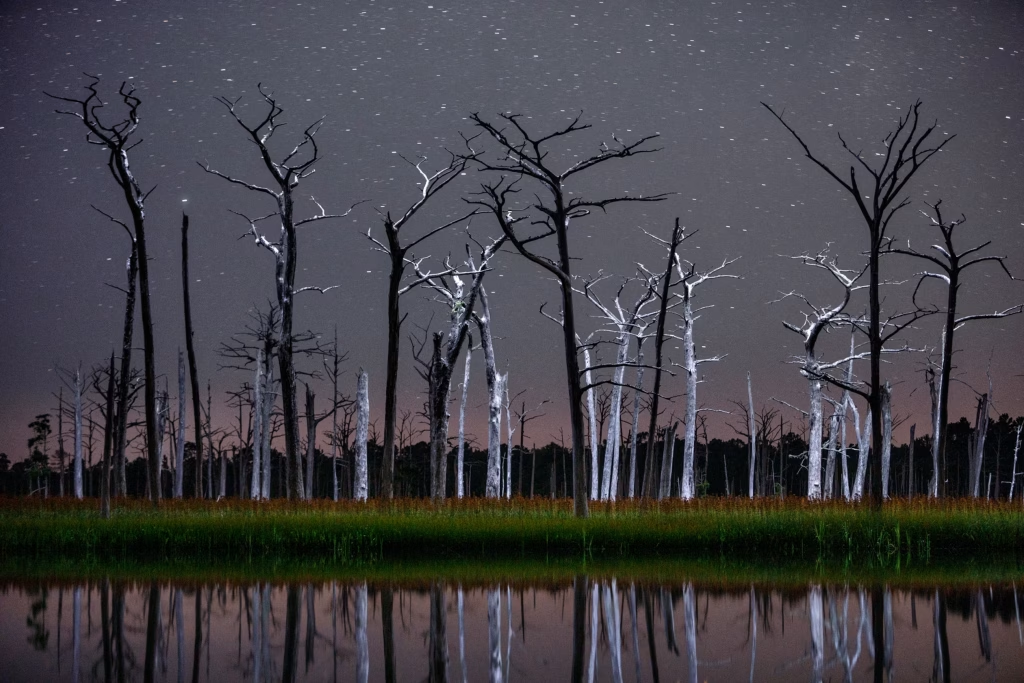
The voids created in the aquifer encourage a volume increase in saline water, which, coupled with the sea level rise, presents a two pronged threat to otherwise freshwater ecosystems. Saltwater intrusion from groundwater sources and saltwater inundation from neighboring brackish water sources will have detrimental effects to the ecosystem services that the Cypress-Tupelo swamps provide to humans and the rest of the local biosphere. Even though bald cypress are more salt tolerant than their habitat associates, they have a limit and are less aggressive to rebound from disturbance. This sliver of resistance does however make the bald cypress a solid candidate for restoration projects that might be subject to decreasing, yet still high salinity levels (Bourne Jr., 2023). When considering the compaction effect associated with groundwater extraction, it is prudent to include habitat restoration programming that encourages infiltration and aquifer recharge to mitigate saltwater intrusion and inundation.

Bourne, Jr., J. K. (2023). One of the most resilient trees on Earth is dying in droves. National Geographic Magazine. retrieved November 19, 2024. https://www.nationalgeographic.com/premium/article/forest-bald-cypress-climate-change-sea-level-rise?rnd=1731688953762&loggedin=true
Eggleston, J. and Pope, J. (2013). Land Subsidence and Relative Sea-Level Rise in the Southern Chesapeake Bay Region. United States Geological Survey. retrieved November 19, 2024. https://pubs.usgs.gov/circ/1392/pdf/circ1392.pdf
National Geographic Magazine. (2023). [Photograph]. retrieved November 19, 2024. https://www.nationalgeographic.com/premium/article/forest-bald-cypress-climate-change-sea-level-rise?rnd=1731688953762&loggedin=true
Petrin, L. (2023) Shrinking Forests. National Geographic Magazine. [Graphic]. retrieved November 19, 2024. https://www.nationalgeographic.com/premium/article/forest-bald-cypress-climate-change-sea-level-rise?rnd=1731688953762&loggedin=true
Virginia and West Virginia Water Science Center. (2022). Virginia Coastal Plain Aquifer Systems. United State Geological Survey. retrieved November 19, 2024. https://www.usgs.gov/media/images/virginia-coastal-plain-aquifer-systems