dvorakrw

Alluvial Soils

The Blackwater River watershed lies in the Coastal Plain of Virginia, which is between the foothills of the Piedmont and the Atlantic Ocean.  In prehistory, oceanic water covered much of the Coastal Plain, resulting in a soil composition of sand and mineral not compacted into bedrock.  The soil is generally very acidic and requires extensive […]

Alluvial Soils Read More »

Dendrology

  The following field cards offer an overview to a few of the most important tree species of the Blackwater River watershed. .pdf: Blackwater River Dendrology  References:   Taxodium distichum, [map], [1], [2], [3] Missouri Botanical Garden. (n.d.). Taxodium distichum var. distichum. Missouri Botanical Garden. retrieved November 24, 2024. https://www.missouribotanicalgarden.org/PlantFinder/PlantFinderDetails.aspx?kempercode=m510 Nyssa sylvatica, [map], [4]. [5] Missouri Botanical Garden.

Dendrology Read More »

Curiosities

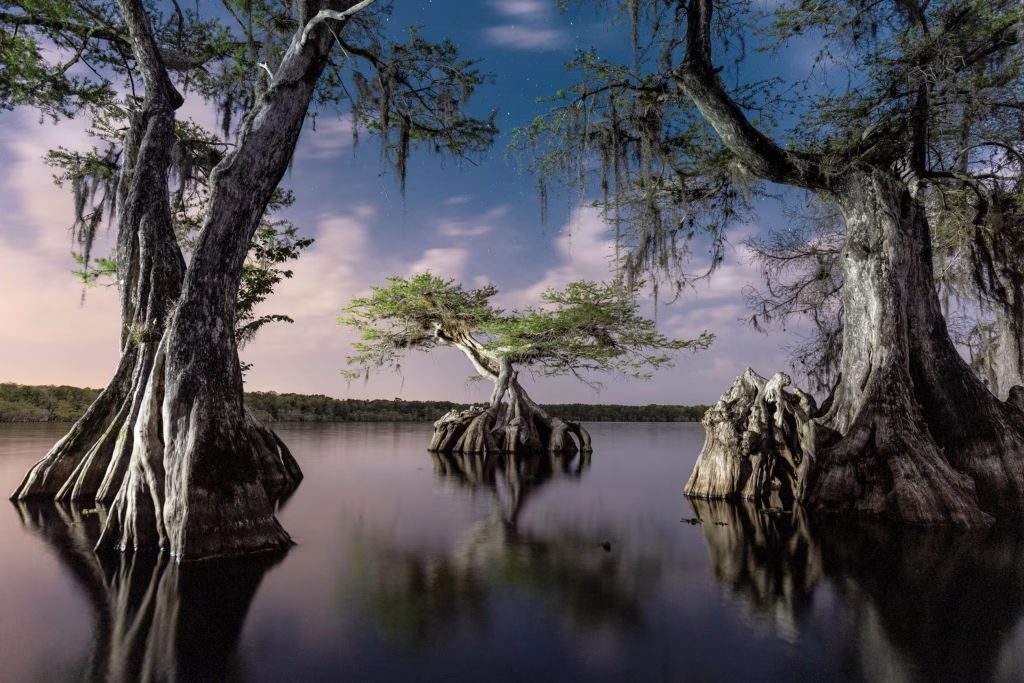
Above: Bald cypress along a lake shore in Florida; Left: Bald cypress core sampling in Congaree National Park, S.C.; Right: Rings from a bald cypress along the Black River in N.C. (NG, 2023) Old Growth Bald Cypress – Tupelo Forest  “Old growth” forests are characterized by the accumulation of rich species diversity, multiple canopy levels, and

Curiosities Read More »

Flooding

Swamps and Flooding Throughout the Blackwater River watershed are numerous permanent swamp habitats that maintain inundation year round.  These swampy wetlands act as sponges absorbing precipitation but also advancing floods.  This retention capability is crucial to the resiliency of watersheds with wetland habitats.  Wetland conservation can even replace the need for dredging and levee systems

Flooding Read More »

Water Quality Equipment

(Escherichia coli) The slow moving water of the Blackwater River, surrounded by agriculture, can encourage the possibility of E. Coli contamination downstream.  Water quality professionals, landowners and conservationists can employ rapid result test kits to determine the presence of harmful microbial life in waterways.  There are several manufacturers of test kits each with certain characteristics

Water Quality Equipment Read More »

Invasive Plant Spotlight

Murdannia keisak (Marsh Dayflower) Characteristics This nonnative, invasive species forms dense mats low to the ground in freshwater and low-salinity tidal marshes, swamps, ditches and other disturbed wetlands.  It is characterized by prostrate stems that creep along at ground level, often rooting at lower nodes.  Its leaves are lance-shaped and range from 2.5-7cm long and

Invasive Plant Spotlight Read More »